
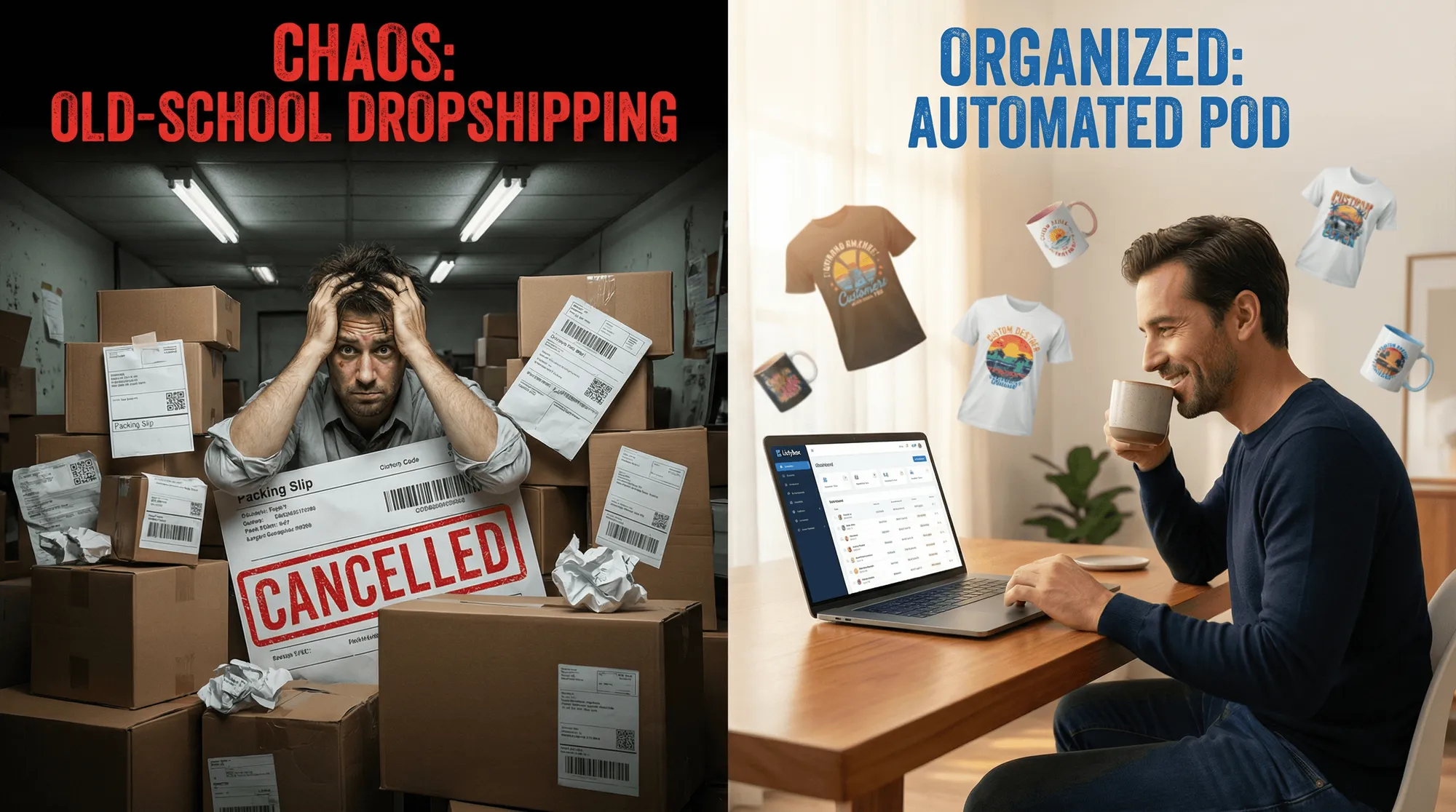
The dream of e-commerce is seductive: selling products to a global audience without ever touching a cardboard box, taping a label, or hoarding inventory in your garage. This business model, known as dropshipping, has been the gateway for thousands of entrepreneurs to leave the 9-to-5 grind. But if you have been researching “what is dropshipping,” you have likely encountered two conflicting narratives: successful gurus flashing dashboards of earnings, and frustrated beginners complaining about suspended accounts and angry customers.
The truth lies somewhere in the middle. Dropshipping is not a “get rich quick” scheme; it is a logistics model. And like any model, it evolves. In 2026, the old way of dropshipping generic gadgets from overseas is fading, replaced by a more robust, brand-focused approach called Print on Demand (POD). This guide will dissect how dropshipping works, expose its hidden traps, and show you how to build a resilient business using Listybox’s automated solutions.
How Does the Dropshipping Business Model Work?
At its core, dropshipping is an order fulfillment method where a store does not keep the products it sells in stock. Instead, the store acts as a middleman.
The Mechanics 1. The Setup: You create an online store (on Etsy, Shopify, etc.) and list products you do not physically own. 2. The Sale: A customer visits your store and buys a product for $30. 3. The Order: You forward that order to your third-party supplier, paying them the wholesale price, perhaps $15. 4. The Fulfillment: The supplier ships the product directly to your customer. 5. The Profit: You keep the difference ($15), minus any marketing and platform fees.
On paper, it is brilliant. It creates a low-barrier entry into entrepreneurship because it requires zero capital for inventory. However, the manual execution of this model is where dreams often turn into nightmares.
The Hidden Risks of Classic Dropshipping
To understand why so many fail, let’s look at a realistic scenario.
Meet Sarah: The “Classic” Dropshipper Sarah wants to start a side hustle. She reads about dropshipping and decides to sell generic pet accessories. She finds a supplier overseas selling a “Smart Cat Toy.” She lists it on her store.
The Struggle: She spends weeks manually copying product images and descriptions.
The Trap: She gets her first 10 sales! But then, the supplier goes silent. When she finally gets a tracking number, it shows a 30-day delivery time.
The Failure: The toys arrive six weeks later in beat-up plastic bags with Chinese characters on the label. The toys are flimsy. Customers demand refunds. Sarah’s PayPal account gets frozen due to disputes.
Sarah failed not because she lacked drive, but because she lacked control. In classic dropshipping, you are at the mercy of your supplier’s quality and speed. You are selling the exact same product as 1,000 other sellers, leading to a “race to the bottom” on price.
Print on Demand: The Branding Evolution
Smart entrepreneurs have pivoted to a specific subset of dropshipping called Print on Demand (POD). This model keeps the “zero inventory” benefit but eliminates the “generic junk” problem.
Why POD is Superior
Unique Intellectual Property: Instead of selling a generic toy, you are selling a t-shirt, mug, or canvas with your unique design. No one can undercut you because they don’t have your design.
Local Production: Most POD suppliers have production facilities in the US or Europe. This means shipping takes days, not weeks.
Brand Value: The product represents your creativity. You are building a brand, not just flipping goods.
Higher Perceived Value: Customers pay more for a hoodie that expresses their personality than for a generic gadget they can find on Amazon.
However, even POD has challenges. Managing hundreds of designs and manually processing orders on sites like Printify can still take hours daily. This is where automation changes the game.
Why POD + Listybox is the Superior Choice
If Sarah had used Listybox for her POD business, her story would have been very different. Listybox is designed to remove the manual friction from the dropshipping equation, effectively acting as your automated partner.
Zero-Touch Order Management Remember Sarah’s panic over tracking numbers? With Listybox, that vanishes. When an Etsy order comes in, Zero-Touch Order Management automatically detects it, routes it to the best performing manufacturer, and fulfills it.
No Copy-Pasting: The system handles the address details.
Automatic Updates: When the item ships, Listybox updates Etsy and notifies the customer.
The Result: Our data indicates that sellers using Zero-Touch Fulfillment save an average of 12 hours per week on administrative tasks. That is 12 hours Sarah could have spent designing or sleeping.
Protecting Your Margins
One of the biggest complaints in dropshipping is thin profit margins. You might sell a shirt for $25, but after production and fees, you are left with pennies.
Listybox combats this with our Lowest Price Guarantee. We leverage the collective buying power of our specialized community to negotiate production prices that are often lower than the “Premium” tiers of other platforms. You get higher margins without paying monthly subscription fees for “premium” access.
How to Start a Profitable POD Business Today
The barrier to entry has never been lower, but the standard for quality has never been higher. To succeed, you must move fast and look professional.
1. Identify Your Niche Don’t just “sell t-shirts.” Sell “funny t-shirts for nurses” or “retro decor for gamers.” Specificity sells. If you are stuck, the Trend Compass trend finder scans social media to find what is viral right now, helping you catch waves before they crash.
2. Create and Scale Designs You don’t need to be professional artist. Use tools like Canva to create simple text-based designs. Then, use the Creation Wizard.
The Old Way: Upload one design to a shirt. Adjust it. Save. Repeat for a mug. Repeat for a hoodie. (Takes 20 minutes per design).
The Listybox Way: Select your design. Select 50 products. Click one button. The Creation Wizard generates hundreds of market-ready listings in minutes.
3. Professional Store Setup Does all of this feel overwhelming? You don’t have to start from scratch. For new entrepreneurs, the technical hurdle of setting up a shop can be the reason they never start. With Listybox Store Setup, our expert team sets up your Etsy store, lists your first 10 products from our catalog, and optimizes everything for SEO. This service is included FREE with annual Starter and Professional plans!
4. Optimize for Search Finally, your store needs to be found. Instead of guessing keywords, use the Magic Wand SEO tool. It analyzes top-performing listings and writes your titles and tags for you, ensuring you rank for terms customers are actually searching for.
Dropshipping is not dead; it just grew up. It evolved into automated Print on Demand. It is no longer about finding a cheap supplier; it is about building a streamlined, automated brand.
Put this into practice in your shop.
Every step from design to live listing, on one platform. Start on the free plan.
No credit card required.